8 Step 21 Day Trigger Playbook for Loan Officers on Mortgage Campaigns
Event-triggered campaigns convert and engage far better than calendar drips, and the fix isn’t complicated: automate a new-lead speed sequence and a pre-qualification follow-up tied to CRM field changes before you build anything else. Behavior-triggered messages produce far higher reply rates than static, scheduled sends, and contacting a lead within five minutes raises conversion rates by roughly 9 times. Get pause logic working first, then scale.
TL;DR:
- Automated, behavior-triggered campaigns targeting new leads can increase conversion rates by responding within five minutes, significantly improving engagement.
- Key triggers include rate drops below a client’s note rate, loan milestones, equity thresholds, and behavioral signals like content clicks or property searches.
- Effective campaigns should be structured in three layers: initial lead-speed sequences, pipeline tracking, and long-term client nurturing, with a focus on one CTA per message.
- Human intervention is essential for sensitive events such as credit inquiries, competitor shopping signals, or application responses, which require prompt callbacks.
- Proper system integration, compliance adherence, and testing are critical to ensure triggers fire accurately, avoid regulatory issues, and optimize campaign performance.
Table of Contents
- What Are the Best Event Triggers for Mortgage Campaigns?
- How Should You Structure a Mortgage Trigger Campaign?
- Which Triggers Need a Human Instead of an Automated Send?
- How Do You Connect CRM, LOS, and Automation Tools?
- What Compliance Rules Apply to Mortgage Trigger Campaigns?
- What Metrics Actually Prove a Trigger Campaign Works?
- How Do You Roll Out Trigger Campaigns Without Breaking Anything?
- Author Perspective: From Transactional Follow-Up to Trusted Advisor
- Get Your Trigger Campaigns Running With Loan Officer AI
- Primary Sources and Further Reading
- Sources
- FAQ
What Are the Best Event Triggers for Mortgage Campaigns?
Not every trigger deserves the same response. Some need a human on the phone within the hour; others can run on autopilot for months. Here’s how to sort them.
- Rate drops against a client’s note rate. When market rates fall meaningfully below what a past client is paying, trigger a short refinance message with a concrete savings estimate, not a generic “rates are down” blast.
- Loan milestones. Lead created, application submitted, conditional approval, clear to close. Each milestone gets its own message, written for that exact moment, not a recycled template.
- Equity and LTV thresholds. Once a homeowner’s equity crosses a useful line, trigger HELOC outreach or a PMI-removal conversation. This is one of the most underused levers in the entire playbook.
- Behavioral signals. Link clicks, form submissions, property searches, and content downloads all indicate intent worth acting on.
Label every trigger as either “immediate human” or “automated nurture.” Credit inquiries and competitor activity belong in the first bucket. Birthdays and content clicks belong in the second, where a well-timed email does the work a phone call would waste on.
How Should You Structure a Mortgage Trigger Campaign?
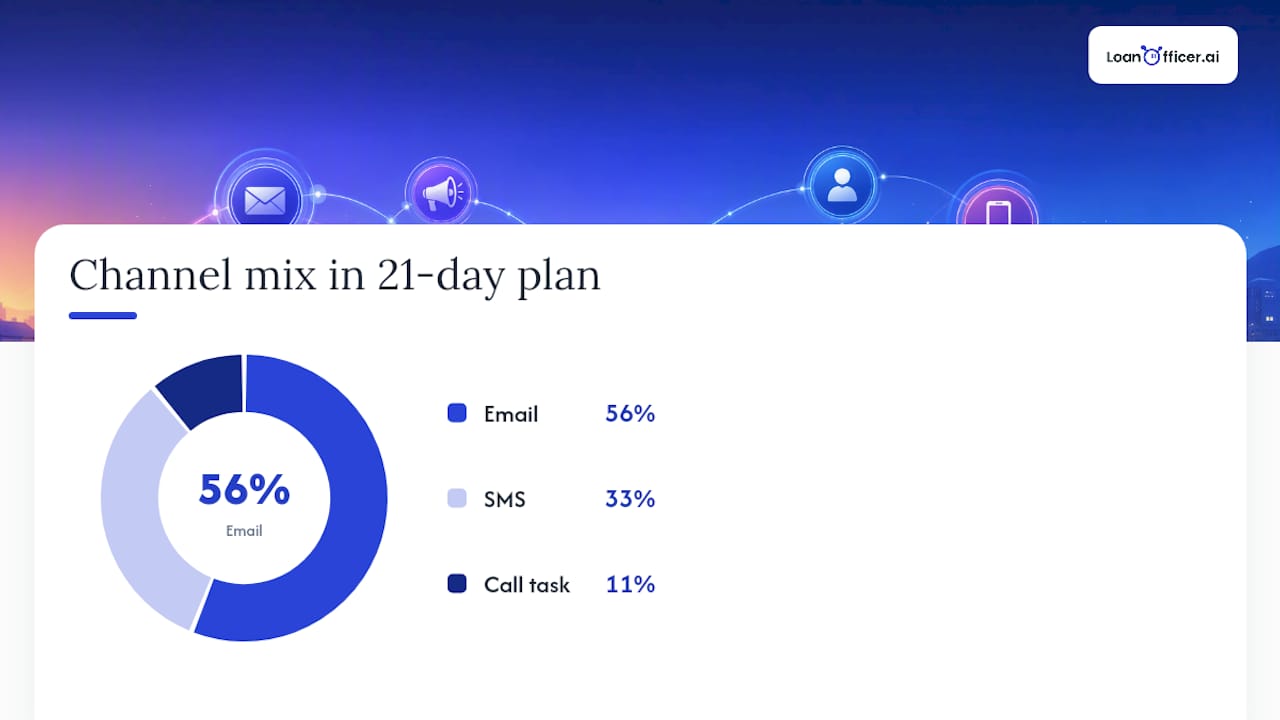
Think in three layers, not one long sequence. Lead-speed campaigns cover Days 0 through 14 and exist to convert a fresh inquiry before it goes cold. Pipeline and milestone campaigns track the loan itself, from application through closing. Post-close and refi campaigns keep former clients warm for years, watching for the next rate window or equity milestone.
Here’s a compact 21-day template you can adapt today:
- Day 0, email + SMS: Instant confirmation with a scheduling link. One CTA only.
- Day 1, SMS: Short nudge if no reply. “Still want to talk rates? Here’s my calendar.”
- Day 3, email: Educational content on loan options, branching by property type if known.
- Day 5, call task: Auto-assign a callback task if no engagement yet.
- Day 8, email: Pre-qualification push with a single clear ask.
- Day 12, SMS: Reminder tied to any open application steps.
- Day 17, email: Social proof or rate-lock urgency, depending on market conditions.
- Day 21, email: Final nurture message before the lead drops into a longer-cycle sequence.
Keep every message to one CTA, cap sends at roughly one every two to three days, and add SMS only when speed matters more than detail. Email still carries the documents and depth SMS can’t.
Which Triggers Need a Human Instead of an Automated Send?
Some events are too sensitive, or too late-stage, to leave to a template. Route these straight to a person.
- Credit inquiries and competitor shopping signals need a callback within roughly five hours, not a queued email three days later.
- Any reply, click on a pre-qualification link, or loan_stage change should pause the sequence immediately. Nothing kills trust faster than a “still thinking about that mortgage?” email landing after someone already applied.
- Suppression logic should check CRM fields before every single send, not rely on a static do-not-contact list that goes stale within weeks.
Pro Tip:Before you turn any sequence loose on your full database, run it against five real records first. Watch whether pause triggers fire correctly, whether the right people get suppressed, and whether the handoff to a human actually happens when it should.
How Do You Connect CRM, LOS, and Automation Tools?
Trigger campaigns only work if one system holds the truth and everything else reads from it. Map these fields first: lead_status, application_status, loan_status, note_rate, and balance. If those five fields are accurate and current, most of your triggers will fire correctly, as explained in detail by the Client Intake Portal’s intake and data-quality processes.
- Prefer native triggers or webhooks between your LOS and CRM over manual exports; a webhook fires the moment a status changes, a spreadsheet does not.
- Add middleware only when you need to orchestrate across multiple tools, like suppressing an email sequence the instant a text reply comes in.
- Keep data current. A trigger built on a stale note_rate field sends the wrong refinance math to the wrong person.
- Test in a sandbox first. Run sample records through the full sequence, check the logs, and confirm suppression works before anything touches live leads.
What Compliance Rules Apply to Mortgage Trigger Campaigns?
Automated doesn’t mean exempt. Every email needs an NMLS ID, a physical business address, and a working unsubscribe link, full stop.
- SMS requires documented consent and a clean opt-out path; TCPA exposure is real for lenders who skip this step.
- Follow the FTC’s telemarketing guidance on consent, disclosure, and recordkeeping for any automated outreach that touches phone or text.
- Don’t over-personalize. Referencing a specific credit inquiry in an email can feel invasive even when it’s accurate; lean on context and opt-in signals instead.
- Log everything. Keep records of sends and consent in case of a regulatory review.
What Metrics Actually Prove a Trigger Campaign Works?
Track speed-to-first-touch, reply rate, open and click rates, conversion to application, and unsubscribe rate. Speed-to-first-touch matters more than almost anything else on this list.
Contacting a lead within five minutes of inquiry can raise conversion rates by about 9 times compared with delayed outreach. Few other single changes move the needle that hard.
- Test subject lines and channel order. Does SMS-first or email-first get a faster reply for a given trigger?
- Test CTA phrasing. “Book a call” versus “See your rate” often performs differently by trigger type.
- Tie triggered sends to pipeline movement, not just opens, so you can see which messages actually push loans forward.
- Review weekly during rollout, then shift to monthly once performance stabilizes.
How Do You Roll Out Trigger Campaigns Without Breaking Anything?
Don’t try to automate everything in week one. Two campaigns, tested properly, beat ten campaigns nobody trusts.
- Build the new-lead speed sequence and the pre-qualification follow-up first. These two alone often produce the fastest lift.
- Map your CRM fields (lead_status, loan_status, note_rate) before writing a single template.
- Configure pause triggers and assign SLA owners so someone is accountable when a lead needs a human.
- Run a five-record test end to end, checking suppression and routing before wider release.
- Watch a small dashboard for 30 days, then move from pilot to full enablement once the numbers hold up.
Author Perspective: From Transactional Follow-Up to Trusted Advisor
The real value of event-triggered automation isn’t the emails themselves. It’s what gets freed up when they work: time to actually advise clients instead of chasing them. That shift tends to show up in referral rates before it shows up in closing numbers. Tools like Loan Officer AI’s marketing automation exist to handle the mechanical parts, the opportunity alerts and pipeline syncing, so the conversations you have are the ones that matter.
— Jared Hart
Get Your Trigger Campaigns Running With Loan Officer AI
Loan Officer AI replaces the patchwork of spreadsheets, list exports, and manual reminders most loan officers use to fake event-triggered marketing, with one system that actually reads CRM fields before every send. It watches loan_status, note_rate, and equity data in real time, fires AI opportunity alerts when a refinance or HELOC window opens, and pauses sequences automatically the moment a lead replies or a loan stage changes.
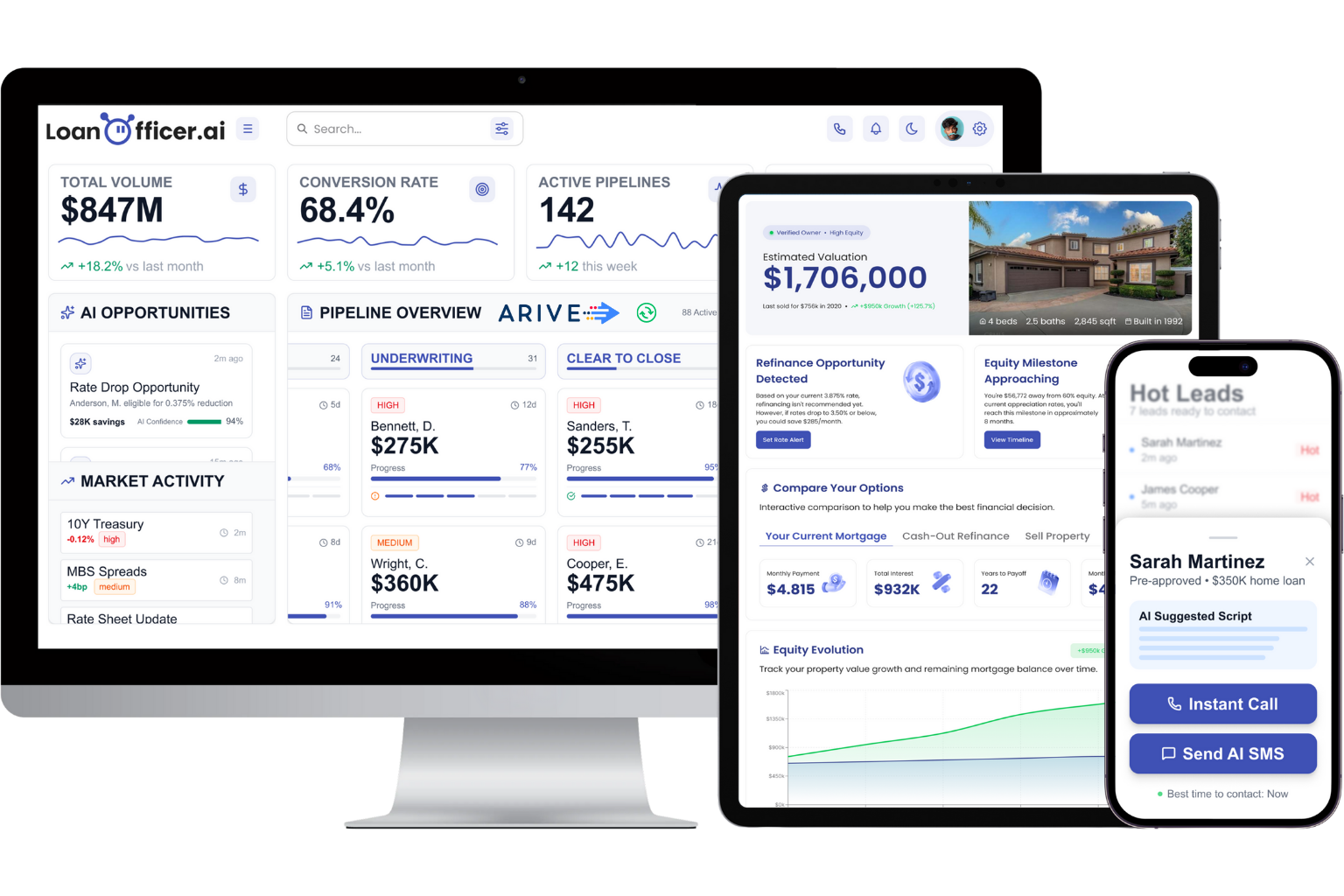
If you want to test this against the templates above, pull five recent records, decide on two or three KPIs like speed-to-first-touch and reply rate, and see how the platform’s CRM and LOS integrations handle them. Plans start at $197 a month for the Starter tier, with Team and Brokerage options above it for growing shops. You can also start with a free trial to see how the automation performs on your own pipeline before committing to anything.
Primary Sources and Further Reading
For deeper compliance guidance, review the FTC’s telemarketing sales rule and industry frameworks on trigger marketing best practices for financial services.
Sources
- Mortgage Drip Campaign Guide for Brokers in 2026
- 6 trigger marketing best practices | Deluxe
- Complying with the Telemarketing Sales Rule (FTC)
- Mortgage drip campaigns that convert: SMS + email playbook
FAQ
Are Mortgage Trigger Leads Illegal Now?
Trigger leads themselves, meaning credit bureau data sold to competing lenders after a hard inquiry, remain a legal but heavily scrutinized practice, not something outright banned nationwide. Compliance depends on how the lead was sourced and how outreach discloses consent, so any automated response should follow FTC telemarketing guidance on consent and disclosure.
What Are the Trigger Terms for Mortgage Advertising?
“Trigger terms” refers to specific loan details, like a stated rate, down payment amount, or monthly payment, that legally require additional disclosures under lending advertising rules. Any campaign message that names a specific number needs the accompanying disclosure language, which is why templates should be built once and reused rather than improvised per send.
What Is the 3-7-3 Rule for a Mortgage?
The 3-7-3 rule refers to older Truth in Lending Act timing requirements: a lender had three business days to send a disclosure after application, borrowers had seven days before closing to review it, and another three-day window applied if terms changed. Much of this framework has since been folded into TRID disclosure timing, but the underlying idea, giving borrowers defined review windows, still shapes how milestone-based messages should be timed.
How Much Does a Mortgage Broker Make on a $500,000 Loan?
Broker compensation varies by lender agreement, loan type, and state, and current figures are best confirmed directly with your wholesale partners rather than assumed from a blanket percentage. What’s consistent across the industry is that faster response times and better lead nurturing, the kind event-triggered campaigns are built for, tend to correlate with higher close rates on the loans a broker does originate.
