Enrich Contacts in Milliseconds to Route High Equity Leads for Loan Officers

Contact data enrichment gives mortgage teams better qualified leads, faster routing, and more accurate refinance and equity opportunity matches by appending property, phone, and lien data to raw contact records. The key data categories are property valuation and equity, verified phone and email, and mortgage or lien flags. Start with call enrichment at the point of capture, or begin vendor due diligence if you plan to buy enrichment at scale.
TL;DR:
- Enrichment data, including property valuation, estimated equity, and lien flags, must meet quality and source transparency standards to avoid compliance risks.
- Validating phone numbers through DNC and reassigned-number checks before outreach is essential for legal safety and effective contact; logging these checks is recommended.
- Scoring models should use confidence thresholds and prioritize verified mobile numbers, flagging low-confidence leads for manual review instead of automatic dialing.
- Real-time enrichment at the point of lead capture enables instant context, but deeper batch lookups improve completeness, with proper standardization and timestamping crucial for CRM integration.
- Using platform-built solutions like LoanOfficer.ai ensures automation while maintaining compliance, vendor due diligence, and audit readiness through transparent data sourcing and secure workflows.
Table of Contents
- 1. Property enrichment: what it appends and how mortgage teams use it
- 2. Phone intelligence and skiptracing: validation and safe contact append
- 3. Turning enrichment fields into contact scores and routing rules
- 4. Getting enrichment into your CRM and LOS without slowing down capture
- 5. Compliance, vendor due diligence, and risk management for enrichment data
- 6. How LoanOfficer.ai approaches enrichment and why it matters for loan officers
- How mortgage teams should balance automation with compliance
- How LoanOfficer.ai helps teams use enrichment safely and at scale
- Sources
- FAQ
1. Property enrichment: what it appends and how mortgage teams use it
Property enrichment appends a set of fields to a contact record that turn a name and address into a prospect worth prioritizing. Typical fields include an automated valuation model (AVM) estimate, estimated equity, last sale price and date, assessed value, lot size and square footage, and year built.
Some of these fields come straight from public records, county assessor data, and recorder filings, so they are as accurate as the source database. AVM figures are modeled estimates built from comparable sales and market trends, which makes them useful for triage but not authoritative for underwriting. Fannie Mae’s Value Acceptance + Property Data program makes this distinction explicit: property data collection is not an appraisal and carries its own submission and quality requirements for lenders using value-acceptance paths.
For loan officers, the practical use cases are:
- Early refinance detection, flagging borrowers whose estimated equity or rate gap crossed a threshold worth a call.
- HELOC targeting, surfacing homeowners with high equity and low existing lien balances.
- Pipeline prioritization, using valuation flags to rank leads before a loan officer spends time on them.
Advanced property lookup APIs can return address-to-parcel results in the range of milliseconds, which is fast enough to enrich a record the moment it hits your CRM instead of waiting for a nightly batch.
2. Phone intelligence and skiptracing: validation and safe contact append
Phone intelligence services validate whether a number is active and describe how it can be used. Standard outputs include line validity, line type (mobile, landline, or VoIP), carrier, prepaid flag, and matches against Do-Not-Call and litigator databases. Many providers also append an associated email as part of the same lookup.
Skiptracing goes a step further, chasing down current contact details for records where the phone or address on file is stale. Quality skiptracing returns alternate phone numbers, forwarding addresses, and sometimes a secondary contact, but match rates vary by data age and record completeness, so treat a skiptrace hit as a lead worth verifying rather than a confirmed contact.
The main outputs to check before dialing:
- Line type and carrier, since mobile numbers carry different consent rules than landlines.
- DNC and litigator matches, which should suppress or flag a record before it reaches a dialer.
- Prepaid or reassigned flags, which signal a higher risk of contacting the wrong person.
Pro Tip:Run every appended mobile number through a DNC and reassigned-number check before your first outbound call, and log the check with a timestamp so you have a record if a complaint ever surfaces.
3. Turning enrichment fields into contact scores and routing rules
Enrichment data only pays off once it becomes a decision. Most scoring models weigh a handful of inputs: equity percentage, rate gap between current and market rates, phone validity, recency of the property record, and any lien or mortgage flags that suggest an active loan.
A simple recipe for converting fields into routing rules:
- Set a minimum confidence threshold for AVM and equity fields before a lead qualifies for outbound contact.
- Weight verified mobile numbers higher than unverified landlines in the routing queue.
- Route high-equity, high-rate-gap leads to your fastest-response team first.
- Flag low-confidence or partial matches for manual review instead of automatic dialing.
Scoring models are a filter, not a verdict. A single strong signal, like high estimated equity, does not confirm intent or eligibility, and treating one field as sufficient invites wasted calls and compliance exposure. Reserve human review for any lead that will drive a significant commitment of time or a sensitive outreach decision.
4. Getting enrichment into your CRM and LOS without slowing down capture
Where enrichment happens in the pipeline changes what you get out of it. Enrichment at the point of capture, triggered the moment a lead form or inbound call creates a record, gives loan officers instant context but can miss fields that a slower, deeper lookup would catch. Batch re-enrichment run on a schedule catches more complete data but delays action on fresh leads.

Common integration patterns include address-to-parcel lookups for property data, webhook-based enrichment that fires on record creation, and batch CSV enrichment for existing databases. Address lookups built for real-time use are fast enough to run before a lead is even routed to a loan officer.
A short checklist for mapping enrichment into CRM and LOS systems:
- Standardize field names across vendors so equity, AVM, and phone-validity data land in the same CRM fields every time.
- Store confidence metadata alongside each appended value, not just the value itself.
- Timestamp every enrichment call so stale data can be flagged and refreshed.
5. Compliance, vendor due diligence, and risk management for enrichment data
Buying enrichment data does not remove your compliance obligations. The FFIEC IT Examination Handbook treats enrichment and data vendors as third-party service providers subject to the same due diligence as any other critical vendor, including verified privacy controls, disclosed data sourcing, and demonstrated cybersecurity practices.
Before signing with a vendor, mortgage firms should confirm:
- Data-source disclosure, so you know whether fields come from assessor records, GIS data, or a reseller of aggregated data.
- Audit documentation, such as SOC 2 or ISO reports covering the vendor’s security controls.
- OFAC and sanctions screening built into the vendor’s own onboarding process.
On the outreach side, the FTC’s staff advisory opinion on the TSR’s established business relationship exemption notes that lenders generally do not have an established business relationship with consumers who respond to a lead generator. Clear disclosure by the lead generator at the point of collection reduces Do-Not-Call exposure. Separately, the CFPB’s RESPA advisory on online mortgage comparison tools flags that platforms monetizing lead placement can create steering or referral-fee risk if presentation is not neutral, a relevant caution for any enrichment vendor that also brokers leads.
6. How LoanOfficer.ai approaches enrichment and why it matters for loan officers
LoanOfficer.ai builds enrichment directly into its workflow rather than treating it as a separate data purchase. The platform appends property and equity data in real time, feeds that into its opportunity detection engine, and triggers automated follow-up sequences without a loan officer needing to run a manual export.
In practice, this maps to two common scenarios:
- Refinance mining, where the CRM scans an existing database for equity and rate-gap changes and surfaces the borrowers worth a call this week.
- Inbound lead fast-response, where a new lead is enriched and routed the moment it arrives, so the first outreach happens with context already attached.
The platform reports strong partner retention among mortgage professional customers, a signal that the automation holds up once teams put it into daily use rather than testing it once and abandoning it.
How mortgage teams should balance automation with compliance
Automation should earn trust in stages, not all at once. Roll out enrichment-driven routing on a test cohort first, compare results against known-file records, and only expand once accuracy holds up. Keep a human in the loop for high-value decisions, and keep vendor contracts, audit reports, and call logs organized, because a regulator or a complaint will ask for that paper trail eventually, not hypothetically.
— Jared Hart
How LoanOfficer.ai helps teams use enrichment safely and at scale
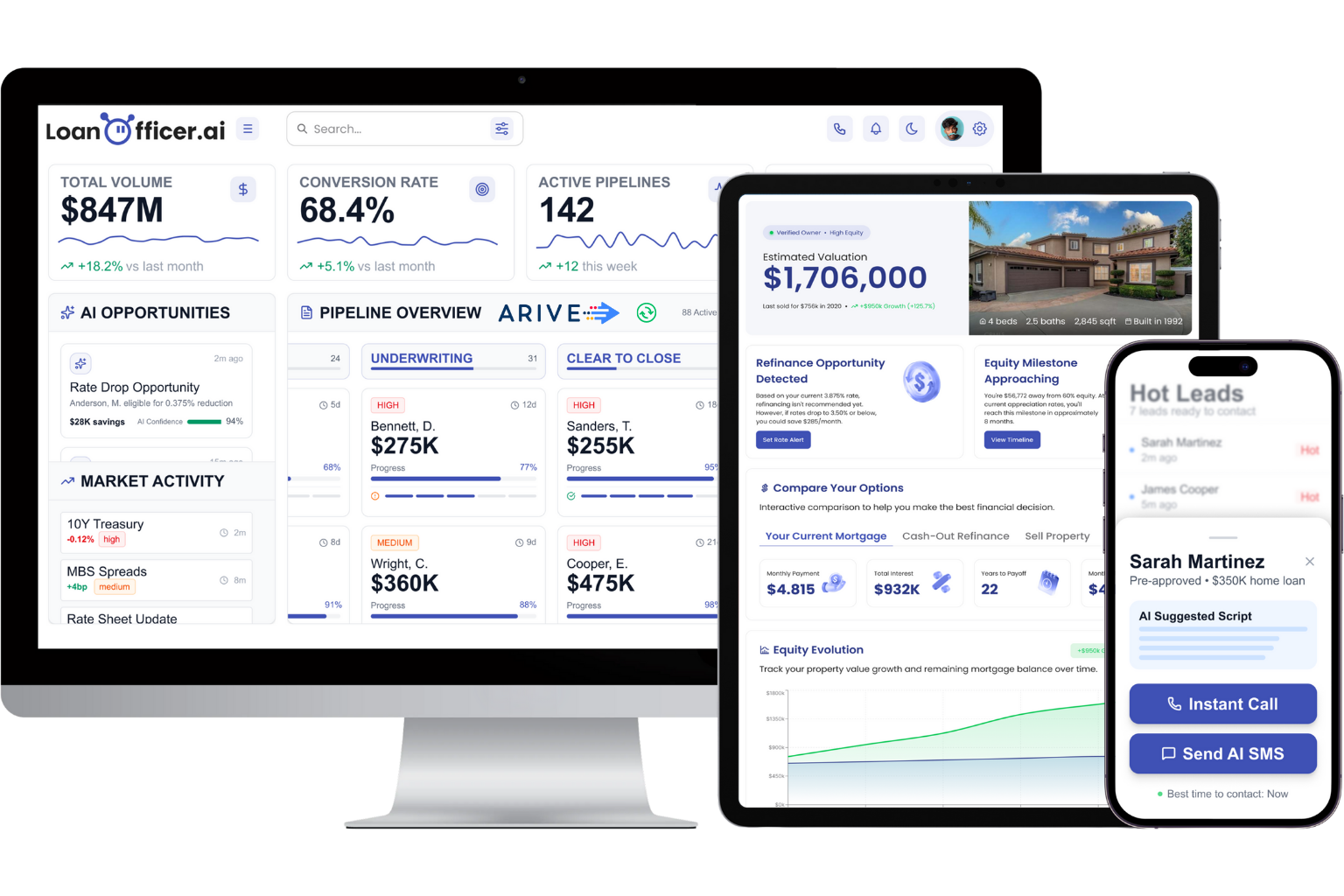
Everything covered here, property enrichment, phone validation, scoring, and CRM mapping, is built into LoanOfficer.ai rather than stitched together from separate vendors. Real-time property and equity append feeds directly into opportunity detection, which routes qualified leads and kicks off automated multi-channel follow-up without a loan officer manually exporting or re-importing data. Refinance mining and inbound response run on the same underlying enrichment, so a lead’s context is already attached before the first call happens.
None of that replaces the vendor and compliance controls described above. Enrichment inside a CRM still relies on the same data-source transparency and audit standards any third-party provider should meet, and LoanOfficer.ai’s platform is built around that expectation rather than around bypassing it.
If your team wants to see the enrichment and routing workflow in action, check plans and pricing or start a trial to test it against your own lead flow.
Sources
- FFIEC IT Examination Handbook - Due Diligence and Third-Party Selection
- FTC staff advisory opinion on TSR’s EBR exemption (Hudson Cook advisory)
- Value Acceptance + Property Data | Fannie Mae
- CFPB RESPA advisory on online mortgage comparison-shopping tools
FAQ
What does data enrichment mean?
Data enrichment is the process of appending additional verified or modeled information, such as property value, phone validity, or lien status, to an existing contact record. In mortgage marketing, it turns a bare name and address into a record with equity, valuation, and contact-quality signals attached.
How can I contact a lender about mortgage questions?
Reach out directly to the lender or loan officer handling your file through the phone number or email listed on your loan documents or their official website. If you are unsure who holds your loan, your monthly mortgage statement lists the servicer’s contact information.
Who do I contact about my mortgage?
Your mortgage servicer, the company listed on your monthly statement, is the correct contact for payment, escrow, or account questions. If your loan was recently sold or transferred, both the old and new servicer are required to notify you of the change and provide updated contact details.
How does enrichment affect mortgage lead conversion?
Enrichment improves conversion primarily by helping teams prioritize and route leads faster, since verified phone numbers and equity signals let loan officers focus on prospects most likely to respond and qualify. The effect depends heavily on data source quality and how enrichment fields are validated before use, per FFIEC third-party guidance on vendor oversight.
Is enriched contact data legally safe to use for outreach?
Enriched contact data can be used for outreach, but the same Do-Not-Call, TCPA, and established business relationship rules apply regardless of where the data came from. The FTC’s staff advisory opinion outlines how disclosure at the point of collection affects a lender’s Do-Not-Call exposure when using third-party leads.
