Refi Leads From 20%+ Equity: Property Data for U.S. Mortgage CRMs
Embedding property and equity data directly in your CRM is the fastest way to turn a dormant borrower database into a refinance and HELOC pipeline. That means pulling automated valuation model (AVM) values, lien and mortgage history, and ownership records into every contact, then wiring API or webhook alerts so opportunities surface without manual searching. An AI-enabled CRM like Loan Officer AI takes that raw data and ranks it into prioritized call lists automatically.
TL;DR:
- Automated property and equity data integration accelerates lead identification, enabling timely outreach for refinance and HELOC opportunities.
- Critical data fields include AVM value with confidence score, lien and mortgage history, ownership flags, and verified contact information, all with confidence indicators.
- Delivery methods like API, webhook, and batch sync must be carefully combined and address-normalized to prevent duplicates and ensure real-time responsiveness.
- Successful triggers rely on specific criteria such as equity above 20% with a three-year loan age for refinancing, or confirmed equity with absentee owner flags for HELOCs.
- Vetting vendors through pilots and testing data freshness, coverage, and compliance flags ensures reliable property data feeding into the CRM.
Table of Contents
- What Property and Equity Data Actually Do for Loan Officers
- What Data Fields Should You Demand From a Provider?
- How Does Property Data Flow Into a CRM Without Breaking It?
- What Results Should You Expect After Integration?
- How Do You Vet and Roll Out a Property Data Vendor?
- Why Speed to Data Beats Volume of Data
- Put Embedded Property Data to Work With Loan Officer AI
- Sources
What Property and Equity Data Actually Do for Loan Officers
Raw contact lists tell you who to call. Property data tells you why to call them today instead of next quarter.
An AVM gives you a fast home value estimate without ordering a full appraisal, and pairing that number with a confidence score tells you how much to trust it before you pitch a refinance. Recorded lien history and HELOC records show the real debt picture on a property, not just what a borrower mentioned two years ago on an application. That’s often the difference between a wasted call and a qualified one.
Ownership flags matter more than most loan officers realize. An absentee or out-of-state owner behaves differently than an owner-occupant, often with different refinance motivations and different contact channels. Appending verified phone and email data on top of that improves the odds someone actually picks up.
- AVM plus confidence score = a defensible equity estimate without a manual pull
- Lien and HELOC history = true leverage, not assumed leverage
- Ownership flags = smarter segmentation for outreach tone and channel
- Freshness and coverage = how soon a trigger event becomes a workable lead
Pro Tip:Treat AVM confidence like a credit score for your data. A high value estimate with low confidence is a lead to double-check, not a lead to call first.
Property data appended to a lead can raise its value substantially by giving loan officers the equity and mortgage context needed to target outreach with real precision instead of guessing.
What Data Fields Should You Demand From a Provider?
Not every property data feed is built the same, and the gaps usually show up after you’ve already signed a contract. Before committing budget, get specific about which fields actually populate your CRM records.
- Valuation fields: AVM value, AVM confidence score, last sale date, and current assessed value.
- Debt and lien fields: all recorded liens, second mortgages, active HELOC lines, and any recorded defaults or notices of sale.
- Ownership fields: owner name, mailing address versus occupant address, an absentee or owner-occupied flag, and a marker for corporate or LLC ownership.
- Contact fields: verified phone and email enrichment, a skip-trace confidence score, and compliance flags for Do Not Call and TCPA status baked directly into the record.
Providers like ATTOM build feeds around exactly this combination, pairing AVM and foreclosure or vacancy signals with bulk and API delivery so the data lands ready for enrichment rather than requiring a separate cleanup pass.
Pro Tip:Ask a vendor for a sample payload before you sign anything. If AVM confidence, DNC flags, and skip-trace scores aren’t in the raw JSON response, they won’t magically appear in your CRM later.
The gap between a mediocre provider and a good one usually isn’t the number of fields. It’s whether every field ships with a confidence indicator you can actually route on.
How Does Property Data Flow Into a CRM Without Breaking It?
Three delivery methods handle different jobs, and mixing them up is the single most common integration mistake mortgage teams make.
Synchronous API calls work best at the moment of intake, when a loan officer needs a live valuation while a borrower is on the phone. Webhooks handle near-real-time events, like a new lien recording at the county level that should trigger an alert within hours, not days. Batch sync handles the heavy lifting: nightly or weekly scans across your entire portfolio to catch equity shifts you’d never spot manually. BatchData’s integration guidance recommends exactly this hybrid model, mixing synchronous lookups with webhook events and scheduled batch jobs depending on urgency.
Address matching is where most integrations quietly fail. Normalizing every address to USPS Publication 28 standards and using the assessor’s parcel number as the join key prevents the duplicate records that pile up when “123 Main St” and “123 Main Street” get treated as two different properties.
- Use upsert logic so updated records overwrite stale ones instead of creating duplicates
- Store a source ID and last-updated timestamp on every field for auditability
- Set confidence thresholds that gate automatic routing into your priority queue
- Push DNC and TCPA flags into the routing logic itself, not just a report you check later
| Delivery Method | Best Use Case | Typical Latency |
|---|---|---|
| Synchronous API | Live lookup during intake call | Seconds |
| Webhook | County recording or lien event | Hours |
| Batch sync | Full portfolio equity scan | Nightly or weekly |
What Results Should You Expect After Integration?
The math behind a refinance play is simple once the data is flowing: flag borrowers with a meaningful estimated equity, a sufficiently aged loan, and a live rate gap against their current note. That combination consistently produces your highest-intent call list, because it filters out equity that exists on paper but isn’t actionable yet.
The HELOC play looks different. Instead of chasing rate-sensitive borrowers, you’re targeting confirmed available equity, often layered with an absentee-owner flag since investment property owners tend to tap equity for renovation or reinvestment more readily than owner-occupants.
A third pattern gets overlooked: retention. A property listed for sale, or a fresh tax lien appearing on a current borrower’s record, should trigger a hardship or retention workflow before that borrower shops your competitor’s rate.
- Refi trigger: equity above 20%, loan age past 3 years, active rate gap
- HELOC trigger: confirmed equity plus absentee or investment-owner flag
- Retention trigger: for-sale listing or new tax lien on an existing borrower
Contact quality is where the real payoff shows up. Enrichment workflows that combine skip-trace data, phone verification, and confidence scoring have shown up to 76% right-party contact accuracy in documented integrations, a meaningful jump over cold lists pulled without verification. Filtering national mortgage records by loan age and lender before you ever dial narrows a broad database into a list worth actually working.
How Do You Vet and Roll Out a Property Data Vendor?
Treat this like any other technical procurement, not a marketing decision made off a sales deck.
- Run a technical pilot. Request sample payloads, an AVM coverage report for your target markets, a list of webhook event types, and bulk or SFTP delivery options.
- Check the operational basics. Confirm data refresh cadence, actual coverage percentage in your service area, the AVM methodology behind the numbers, and which compliance flags ship natively.
- Push on commercial terms. Get clarity on the pricing model, pilot length, onboarding support, and any SLA or uptime guarantee before you commit to per-record pricing.
- Plan the rollout in stages. Start with a handful of pilot ZIP codes, define QA rules and dedup logic up front, train your team, and build a KPI dashboard before expanding portfolio-wide.
Pro Tip:Run the pilot for three to six weeks against a matched control segment. Comparing conversion and cost per acquisition side by side tells you whether the uplift is real before you’re locked into pricing across your entire database.
Why Speed to Data Beats Volume of Data
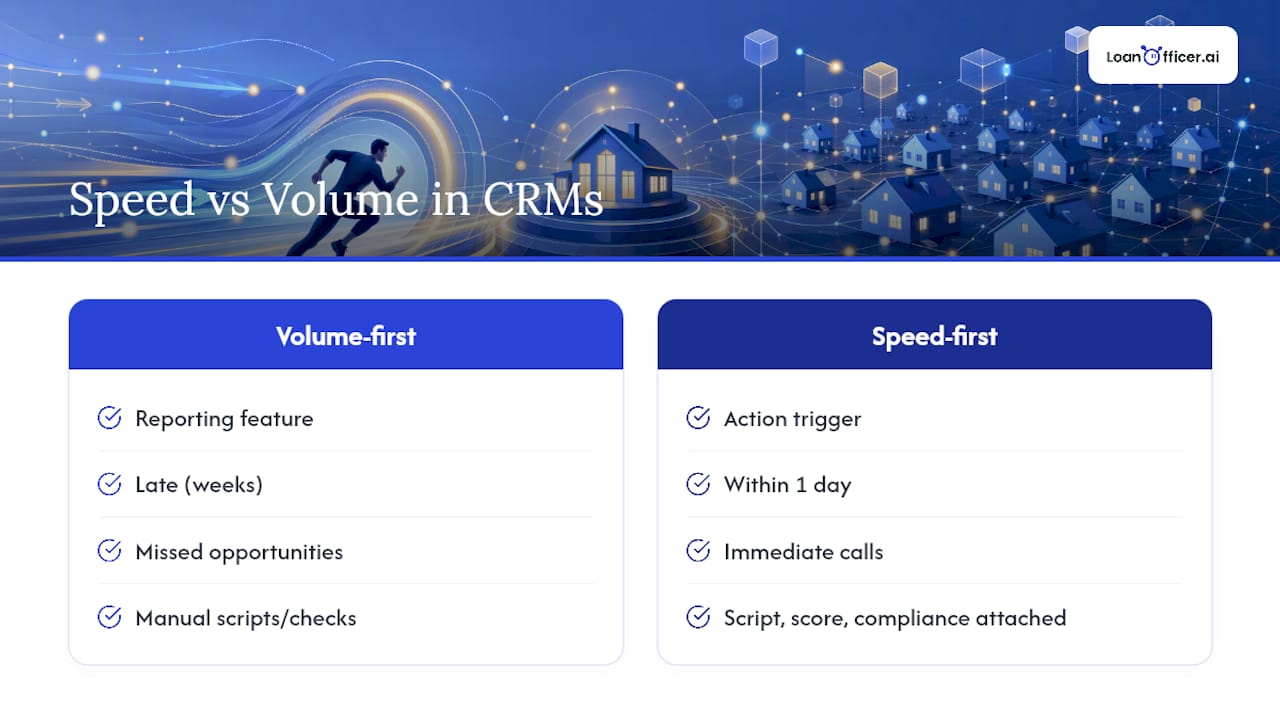
Most loan officers over-index on how many records a provider has and under-index on how fast a trigger event reaches their desk. A lien recording that surfaces three weeks late is a missed opportunity, not a lead. The teams winning refinance and HELOC business right now aren’t the ones with the biggest data contracts. They’re the ones whose CRM turns a county recording into a phone call within a day.
That’s also where I’d push back on conventional CRM thinking. Most systems treat property data as a reporting feature, something you check, not something that acts. The better model treats every incoming data point as a trigger that should already have a call script, a priority score, and a compliance check attached before a human ever sees it. Platforms like LoanOfficer.ai are built around that exact logic: ingest the data, score it, and route it, so the loan officer’s job starts at the phone call, not the spreadsheet.
— Jared Hart
Put Embedded Property Data to Work With Loan Officer AI
This CRM platform is built specifically to turn property and equity data into ranked, ready-to-call leads instead of another dashboard you have to interpret yourself. It ingests AVM values, lien history, and ownership records, then layers on automated alerts that flag refinance and HELOC opportunities the moment they become real.
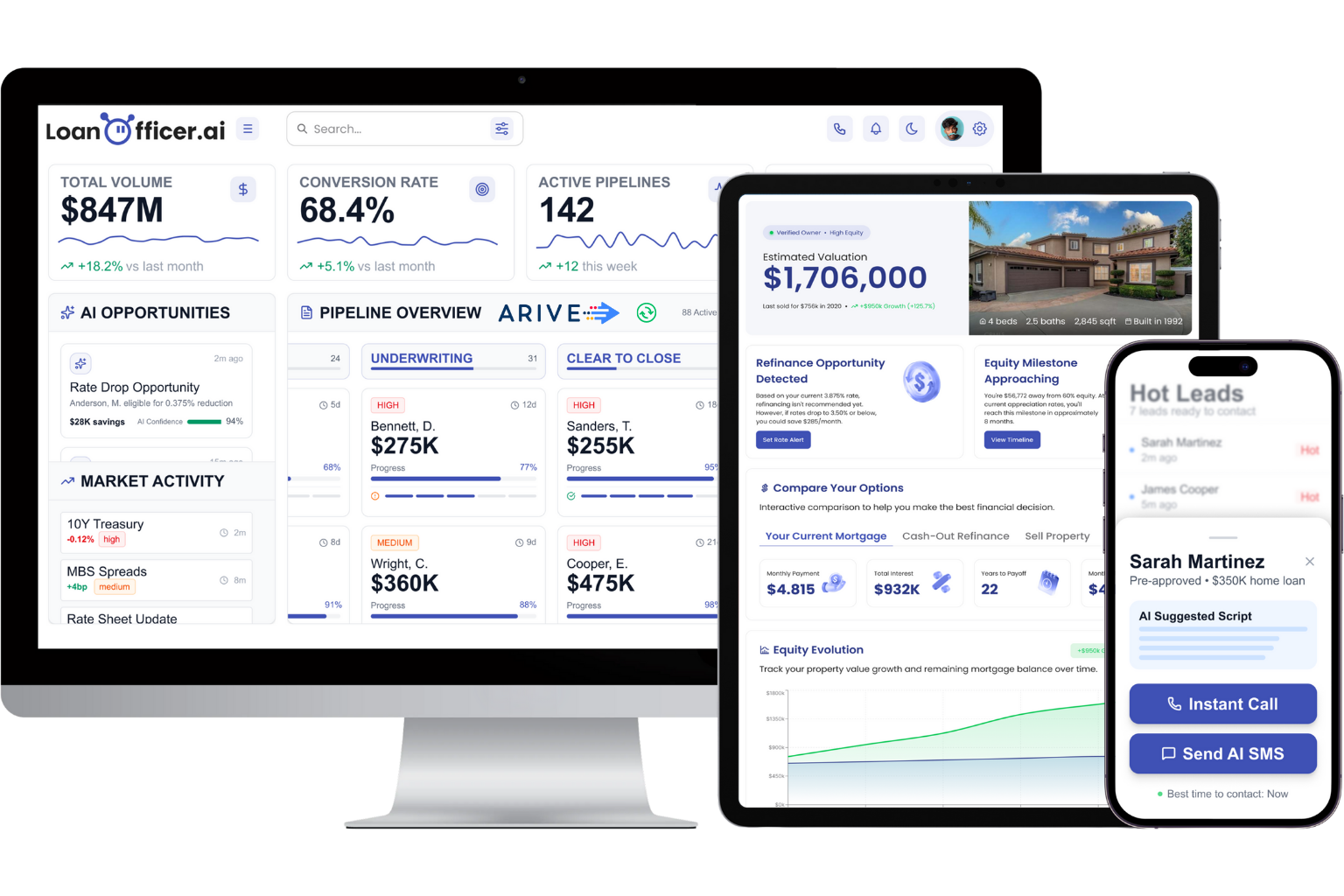
The platform matches the workflow this guide covers: automated database mining for equity shifts, LOS integrations that keep records current, and multi-channel outreach that fires the moment a lead clears confidence thresholds. It’s also how some partners have caught refinance opportunities they would have otherwise missed entirely.
If you’re managing outreach manually or relying on a CRM that treats equity data as an afterthought, a pilot is the fastest way to see the difference. Explore the mortgage CRM platform built around this exact model, or start with opportunity alerts to see how fast a triggered lead can reach your desk.
Sources
- ATTOM — Lead generation use case
- Acres — Using mortgage filters to find qualified leads
- BatchData — Property data API integration for mortgages
- Array — Lead generation’s missing piece: Property data
