Realtor Drip Campaign: Build Leads That Convert

A realtor drip campaign is an automated series of targeted messages designed to nurture real estate leads over time, increasing conversion through timely, relevant follow-up. The industry term for this practice is “automated lead nurturing,” and the two phrases describe the same core mechanic. Done right, a drip campaign keeps you top of mind with prospects who are not ready to act today but will be ready in 30, 90, or 180 days. Loan officers who build these systems stop losing warm leads to silence and start converting them into closed deals.
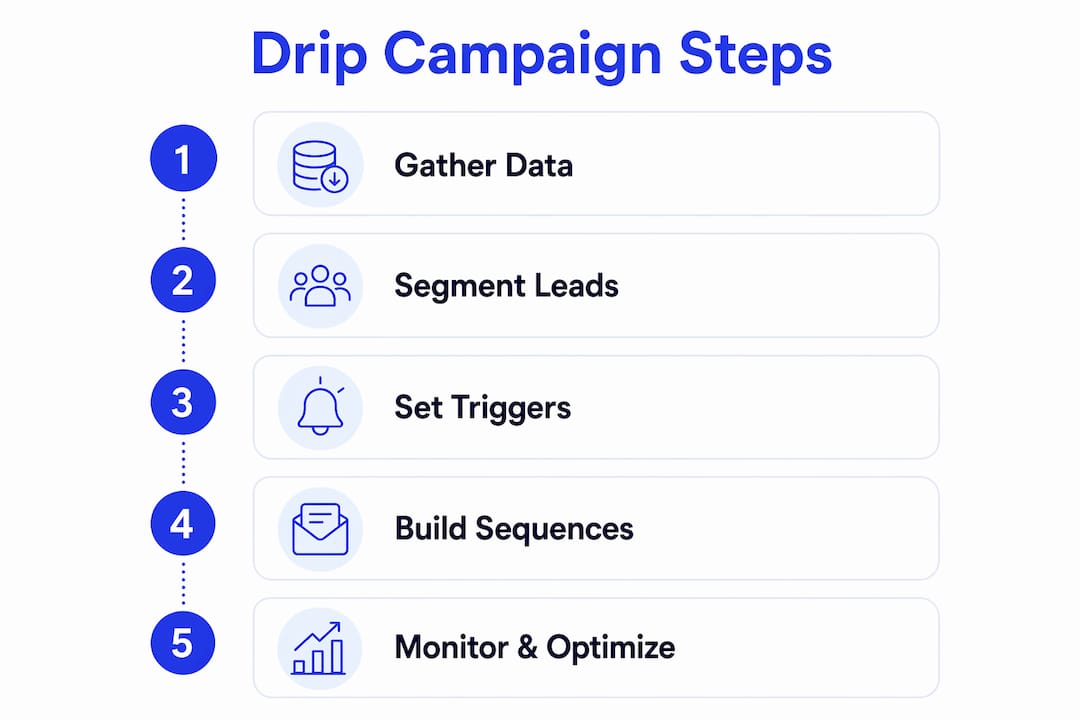
What does a realtor drip campaign require to launch?
Every effective drip campaign starts with three building blocks: a CRM with automation, clean contact data, and a content library. Without all three, your sequences either never send, reach the wrong people, or deliver messages that feel generic and get ignored.
CRM features that matter most
Your CRM must support behavioral triggers, contact segmentation, and multistep workflows. Behavioral triggers fire a message when a lead clicks a link, fills out a form, or visits a specific page. Time-based triggers send messages on a fixed schedule regardless of what the lead does. The best campaigns use both.

Segmentation lets you separate high-intent buyers from low-interest contacts and send each group a different message path. Without segmentation, you send the same email to someone ready to close next month and someone who just browsed a listing out of curiosity. That mismatch kills engagement.
Tool capability comparison
| Feature | Entry-level tools | Enterprise platforms |
|---|---|---|
| Behavioral triggers | Limited or manual | Fully automated |
| Contact segmentation | Basic tags | Multi-variable rules |
| Analytics dashboard | Open rates only | Full funnel reporting |
| CRM integrations | Few native options | Broad API support |
| Co-marketing support | None | Built-in templates |
Pro Tip:Choose a CRM built for mortgage or real estate workflows, not a generic email tool. Platforms like Loanofficer include realtor engagement tools designed specifically for loan officer outreach, saving hours of manual setup.
Clean data is non-negotiable. Segment your contacts by lead source (open house, referral, website form) before you build a single sequence. Lead origin predicts intent, and intent determines which message path converts.
How do you build drip sequences for different lead types?
Top agents tailor drip campaigns to lead origin and intent, creating distinct paths for high-intent buyers versus low-interest contacts. This single practice separates loan officers who close referrals consistently from those who blast the same newsletter to everyone.
Steps to build a targeted sequence
- Audit your lead sources. List every channel bringing in contacts: agent referrals, website forms, open houses, and social media. Each source carries a different level of intent.
- Assign a sequence to each source. A referral from a trusted agent gets a warm, relationship-focused sequence. A cold website lead gets an educational sequence that builds trust first.
- Set your trigger logic. Decide which actions move a lead forward (clicking a rate calculator link) and which actions pause the sequence (booking a call).
- Write three to five emails per sequence. Each email should have one goal: answer a question, share a resource, or invite a reply.
- Add behavior-based branches. If a lead clicks your pre-approval link, move them to a high-intent sequence immediately. Do not wait for the next scheduled email.
- Schedule a manual touchpoint at day 14. A personal call or video message at this stage improves perceived authenticity and conversion rates compared to fully automated paths.
Common mistakes to avoid
- Sending the same sequence to every lead regardless of source
- Writing emails that pitch too early before building trust
- Ignoring click and reply data when deciding who to call
- Setting sequences to run indefinitely without a re-engagement check
- Skipping a welcome email in the first 24 hours after a lead enters your system
The first email in any sequence sets the tone. Send it within one hour of a lead entering your system. Delays beyond 24 hours cut response rates sharply.
What content and timing tactics maximize drip campaign performance?
Personalized, value-driven content including market data, client stories, and short videos generates higher engagement in drip campaigns than generic promotional messages. The goal of every message is to give the reader something useful before asking for anything in return.
Content that performs
- Local market updates: A one-paragraph summary of what rates or inventory did this month gives leads a reason to open every email.
- Client success stories: A two-sentence story about a buyer you helped close in a competitive market builds credibility without sounding like a sales pitch.
- Short video messages: A 60-second personal video explaining one mortgage concept outperforms a text-only email on click-through rates.
- Pre-approval guides: A simple checklist of documents needed for pre-approval answers the question every buyer has but rarely asks.
Timing and frequency
Send your welcome email within one hour of lead capture. Follow up on day 3, day 7, and day 14. After the first two weeks, shift to a bi-weekly cadence for the first three months. Beyond 90 days, move to monthly unless the lead shows activity.
For leads who go cold after 90 days without a response, deploy a 3-email breakup sequence. This sequence uses loss aversion psychology to re-engage silent contacts and achieves response rates of 15–25% from previously unresponsive leads. The final email in the sequence states plainly that you will remove them from your list. That directness prompts replies from leads who were simply waiting for the right moment.
Pro Tip:Subject lines that reference a specific local market event (“What the Fed’s move means for your home search”) outperform generic subject lines like “Checking in” every time. Add a short video thumbnail to any email and you will see a measurable lift in clicks.
How do you monitor and optimize your drip campaigns?
Tracking open rates, click rates, and reply rates tells you which messages work and which ones lose attention. Open rate measures subject line effectiveness. Click rate measures content relevance. Reply rate measures genuine interest.
Key metrics to watch
- Open rate below 20%: Your subject lines need revision or your send time is wrong.
- Click rate below 2%: Your content is not matching what the lead actually wants.
- Unsubscribe spike: One message in your sequence is off-tone or too frequent.
- High open, low click: Your email body is not delivering on the subject line’s promise.
Optimization approaches
| Issue | Likely cause | Fix |
|---|---|---|
| Low open rates | Weak subject lines | Test two subject line variants per email |
| High unsubscribes | Too frequent or irrelevant | Reduce cadence, tighten segmentation |
| No replies | Generic content | Add personalization tokens and local data |
| Stale sequences | Content not updated | Audit sequences every 90 days |
Use your CRM analytics to identify which leads opened three or more emails without replying. Those contacts are warm but hesitant. Move them to a high-touch sequence that includes a personal call or a automated follow-up prompt from your CRM. Do not let engaged leads sit in a generic sequence indefinitely.
How do drip campaigns fit into realtor co-marketing strategies?
Drip campaigns work best when they are part of a broader realtor co-marketing strategy that builds long-term partnerships with agents. A drip sequence that nurtures a shared lead pool strengthens the loan officer-agent relationship because both parties see results from the same effort.
Agent referral leads close at 15–30%, significantly outperforming purchased leads. That gap exists because referral leads arrive with built-in trust. A well-run drip campaign protects that trust by keeping the lead engaged between the referral and the closing.
“Speed and responsiveness are the #1 factor real estate agents consider in their relationships with loan officers, above rates and programs. 59% of agents cite responsiveness as the top factor when choosing a lending partner. A drip campaign that responds to lead behavior instantly signals to agents that their referrals are being handled with care.”
RESPA-compliant co-marketing requires non-exclusive partnerships, payments tied to fair market value of services, written agreements, and consumer disclosure. Any joint drip campaign or co-branded email sequence must meet these standards. Build your co-marketing templates with compliance in mind from day one.
Practical co-marketing tactics that work alongside drip campaigns include:
- Co-branded market update emails sent to a shared contact list
- Joint open house follow-up sequences triggered the day after an event
- Shared video content where the agent and loan officer both appear
- Monthly check-in emails to the agent’s past clients offering a free rate review
Agents value loan officers who make their job easier with co-marketing and fast, reliable communication, not just closing loans. A drip campaign that delivers value to the agent’s clients reflects well on the agent. That reflection turns into more referrals.
Key Takeaways
A realtor drip campaign converts more leads when it combines behavior-based triggers, segmented sequences, value-driven content, and consistent co-marketing with agent partners.
| Point | Details |
|---|---|
| Segment by lead source | Assign distinct sequences to referral, website, and open house leads for better conversion. |
| Use behavior-based triggers | Fire messages based on link clicks and form fills, not just time intervals. |
| Deploy a breakup sequence | A 3-email re-engagement series recovers 15–25% of cold leads after 90 days of silence. |
| Audit metrics every 90 days | Review open, click, and reply rates to catch stale content before it hurts your list. |
| Align drip with co-marketing | RESPA-compliant joint campaigns with agents turn shared leads into high-conversion referrals. |
Why most drip campaigns fail before they start
I have seen loan officers spend weeks building elaborate 20-email sequences, only to watch them produce zero replies. The problem is almost never the technology. It is the assumption that automation replaces judgment.
The campaigns that actually work treat each sequence as a living document. You write it, launch it, watch the data for 30 days, and then rewrite the two emails with the lowest click rates. That cycle never stops. Loan officers who treat their drip campaign as a “set it and forget it” system are the same ones complaining six months later that email does not work.
The other mistake I see constantly is ignoring the manual touchpoint. Automation handles the volume. A personal call or video message at day 14 handles the conversion. Hybrid campaigns that combine automation with manual high-touch messages at key milestones consistently outperform fully automated paths. The data backs this up, and so does common sense. People buy from people, not from sequences.
The realtor relationship piece is where most loan officers leave the most money on the table. Building a referral pipeline requires showing up consistently, providing useful marketing content, and investing real time in relationships. A drip campaign is the infrastructure. You are still the relationship.
— Jared
Loanofficer’s CRM for realtor drip campaigns
Loanofficer is built specifically for mortgage professionals who need drip campaign automation, realtor relationship tracking, and co-marketing tools in one place.
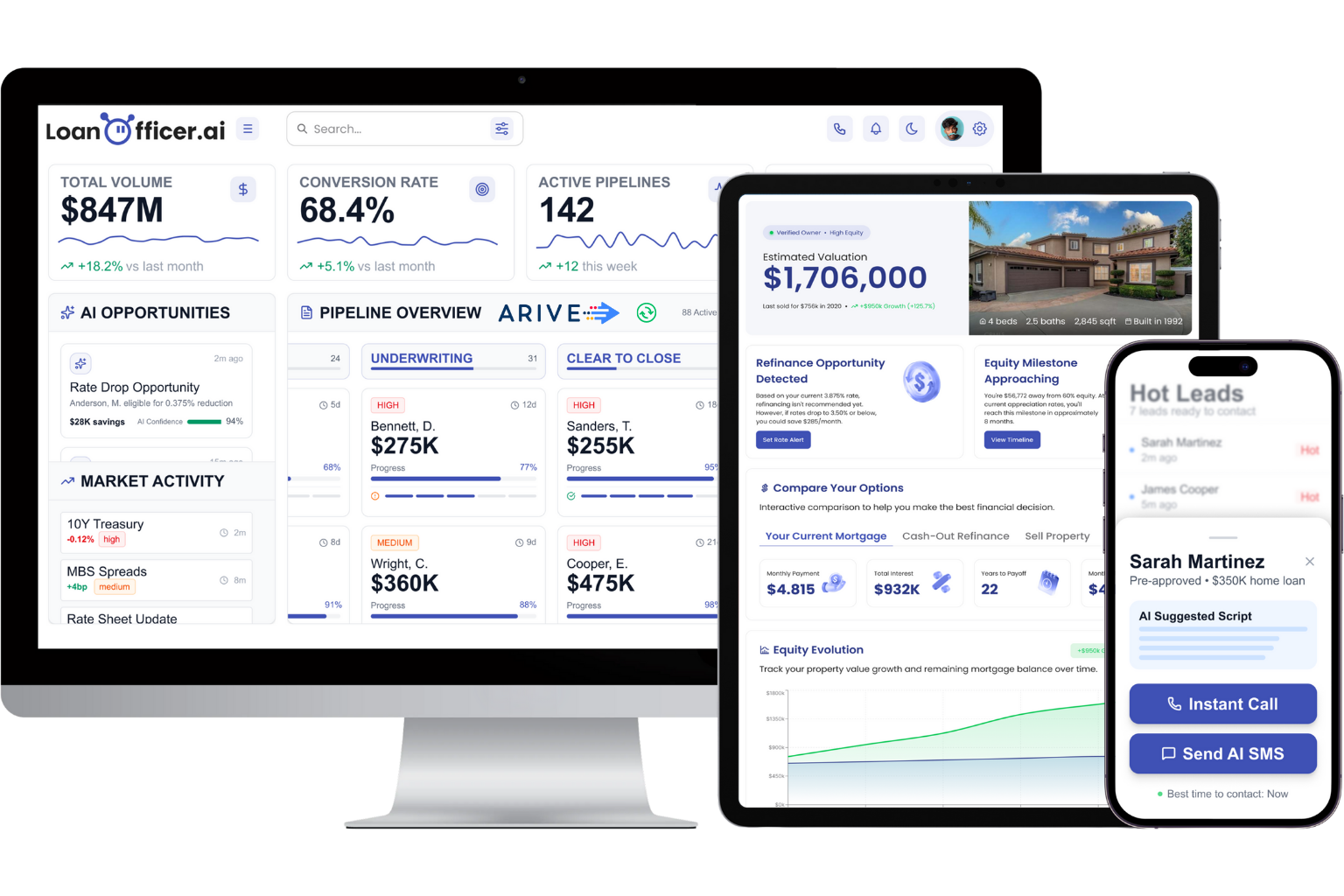
The AI-powered mortgage CRM includes behavior-triggered sequences, contact segmentation, and built-in realtor engagement features that keep your agent partnerships active without manual follow-up. Loanofficer reports 93% partner retention, which reflects what happens when loan officers stop letting leads fall through the cracks. Whether you are an independent loan officer or part of a larger mortgage brokerage team, the platform gives you the tools to build campaigns that actually convert.
FAQ
What is a realtor drip campaign?
A realtor drip campaign is an automated series of emails or messages sent to real estate leads on a scheduled or behavior-triggered basis. The goal is to nurture leads over time until they are ready to act.
How many emails should a drip sequence include?
Most effective sequences run three to five emails per stage, with a separate re-engagement sequence for cold leads. A 3-email breakup sequence works well for contacts who have not responded in 90 or more days.
What triggers should I use in my drip campaign?
Behavior-based triggers like link clicks and form submissions outperform time-only schedules. Use both: time-based for regular nurturing and behavioral triggers to accelerate high-intent leads.
How does a drip campaign support realtor co-marketing?
A co-branded drip sequence nurtures shared leads from agent referrals, keeping both the loan officer and the agent top of mind. This approach strengthens the partnership and improves referral close rates.
What metrics should I track to improve my drip campaigns?
Track open rate, click rate, and reply rate for every email in your sequence. Low click rates signal a content mismatch; a spike in unsubscribes signals a frequency or relevance problem that needs immediate correction.
