Power Hour Calling for Loan Officers: Book More in One Hour

A power hour is a timed, focused dialing session built to put more live conversations and booked appointments into a focused block you would otherwise spend dialing in scattered bursts. For loan officers, brokers, and the managers who coach them, it turns calling from background noise into a scheduled production block. This guide gives you the agenda, prep list, scripts, and metrics to run one this week.
TL;DR:
- Structure a 60 minute session with three calling blocks, two brief resets, and huddles before and after; reserve the final five minutes for follow up.
- Sort contacts by priority, confirm the dialer and headset, and silence interruptions; call referrals and past clients one at a time for personalized openers.
- Use parallel dialing for large aged or purchased lists, but expect more hang ups; test calling windows by contact type and track connect rates.
- Track connects, conversations, and appointments by rep and segment; low connection rates point to list or timing issues, while weak appointment conversion calls for coaching.
- Log quick dispositions during calls, then turn every warm conversation into a dated follow up task during the wrap so callbacks happen when promised.
Table of Contents
- Why do power hours work, and when should you run one?
- What does a 60-minute power hour agenda look like?
- What should you prepare before the hour starts?
- How should you time your calls and choose a dialing mode?
- What openers and quick qualifying questions work best?
- How do you keep reps motivated without losing focus?
- What should you measure during and after a power hour?
- What goes wrong during a power hour, and how do you fix it?
- What do successful power hour scripts sound like?
- How do you connect power hour outcomes to your CRM?
- How do you adjust a power hour for different loan products and clients?
- A manager’s take: protect the huddles, not just the hour
- How we help you run a power hour from start to finish
- FAQ
- Sources
Why do power hours work, and when should you run one?
The idea behind power hour calling is the “surge, back off, surge” strategy: concentrate outbound prospecting into focused blocks, then protect the rest of the day for deeper work, according to InsideSales. A tight sprint beats a day of half-attention dialing because you stay in rhythm, you get quick feedback on production, and you stop switching between calls, email, and admin.
Cold calling itself is far from dead. Survey results from HubSpot’s cold calling report show roughly two-thirds of sales professionals work at organizations that use it, and many reps report more call volume than in 2024. That means your competitors are dialing too, and a structured hour is how you make your share of those conversations count.
Good moments to schedule one:
- A daily or three-times-a-week cadence, same time every time
- A quarter-end or month-end push
- The day a new list lands
- After a rate move or other market event that gives you a reason to call
Because the calling is batched, the rest of your day opens up for processing files, writing up borrowers, and the deeper work that does not belong in a dial session.
What does a 60-minute power hour agenda look like?
Copy this schedule into your calendar as a recurring block.
- Minutes 0–5, pre-huddle: Confirm the target list, the hourly goal, and one objection to rehearse.
- Minutes 5–20, calling block one: Dial without stopping. Log dispositions as you go.
- Minutes 20–22, reset: Stand up, sip water, glance at the scoreboard.
- Minutes 22–35, calling block two: Same rules. Keep openers short.
- Minutes 35–37, reset: One-minute breather, then adjust your opener if it is not landing.
- Minutes 37–50, calling block three: Push for appointments now. This is where momentum pays off.
- Minutes 50–55, quick huddle: Share conversations, appointments, and one win or lesson.
- Minutes 55–60, wrap: Finish dispositions, set follow-up tasks, and send any promised texts or emails.
Variants. For paired coaching, one rep dials while a partner listens and takes notes, then they swap. For a team relay, reps take turns owning a block and passing the headset along. For a blitz, extend the session and take a longer break in the middle.
Setting goals. Start from your own baseline. Run several sessions, count conversations and appointments per session, then set the target slightly above your average. A goal you can hit builds the habit.
What should you prepare before the hour starts?
The session is for calling, not for fixing lists or hunting for a working headset. Set aside time beforehand for this checklist:
- Build the list: Filter by last-touch date, referral source, and signals of equity or refinance potential, such as a rate higher than today’s market.
- Freeze your calendar: No meetings, no internal tasks, do-not-disturb on for the full block.
- Check the tech: Confirm your dialer mode, headset, call recording, and disposition templates. Our calling tutorials walk through dialer setup step by step.
- Prep a few openers: Keep them visible on screen, not buried in a document.
- Plan the pre-huddle: Targets, a quick objection drill, and a motivational cue make a focused pre-huddle.
Pro Tip:Sort your list in advance so your highest-priority contacts are first. Reps who start with the best names build early momentum and stay sharper through the hour.
Prep also applies to the quality of the call itself. A sales call preparation guide from a sales coaching firm offers a complementary pre-call checklist that pairs well with the pre-huddle above.
How should you time your calls and choose a dialing mode?
Dialing mode changes what the hour feels like. Power dialing places one call at a time and suits precision lists and senior contacts, where each conversation matters. Parallel dialing places several calls at once and suits large lists where scale matters more. Orum’s cold calling report points to power dialing for higher connect rates on precise lists and notes that blending both modes is often best.
Practical guidance:
- Referral partners and past clients: Use one-at-a-time dialing so you can personalize the opener.
- Large aged-lead or purchased lists: Parallel dialing helps you reach people faster, but expect more hang-ups and quick screening.
- Time windows: Test different calling windows by contact type. Realtors may pick up between showings, while borrowers may answer after work.
- Priority order: Call decision-makers and your warmest relationships first, while you are freshest.
Keep a simple log of connect rates by time block over a period of time. Your own numbers beat any generic window.
What openers and quick qualifying questions work best?
Short beats clever. State who you are, why you are calling, and ask for a minute. Our guide to mortgage cold outreach has more templates once these basics feel natural.
Three openers:
- “Hi Maria, it’s Jared with ABC Lending. I’m calling because rates moved this week and I wanted to see if a quick look at your loan makes sense. Do you have a minute?”
- “Hi Tom, Jared here. We’ve worked with a few of your buyers lately and I wanted to introduce myself properly. Is now a bad time?”
- “Hi Dana, it’s Jared. I helped you with your purchase a while back and wanted to check in on how the house is treating you. Do you have a moment?”
Two qualifying prompts:
- “When are you next looking at your options?”
- “Have you thought about refinancing in the past twelve months?”
Their answers tell you urgency and fit fast. Anything warm becomes an appointment ask: “Would Thursday at 10 or Friday at 2 work for a ten-minute review?”
Logging during the hour: Use one-click dispositions (connected, voicemail, no answer, appointment set, call back) and a single-line note. Fuller notes can wait until the wrap block.
How do you keep reps motivated without losing focus?
Light competition raises energy as long as the scoreboard measures business outcomes, not just dials.
Show these live:
- Calls placed
- Connects
- Real conversations
- Appointments set
Contest ideas:
- First to five conversations
- Streak leaderboard for consecutive power hours completed
- Team relay with a shared appointment target
- Themed hours, such as “past-client refi hour” or “realtor reconnect hour”
Rewards that cost nothing: A status badge, a shout-out in the team channel, first pick of next week’s list, or choosing the next theme.
Pro Tip:Reward conversations and appointments over raw dials. Otherwise reps race through numbers and skip the listening that actually books meetings.
What should you measure during and after a power hour?
Track a small set of numbers every session, per rep and as a team:
- Dials: Effort
- Connects: List quality and timing
- Conversations: Opener and tone
- Appointments set: The result that matters
In the days after, watch conversion from appointment to real opportunity, appointment attendance, and whether follow-up tasks were completed on time.
Review these weekly. A low connect rate points to list or timing problems. Plenty of conversations but few appointments points to a coaching opportunity on the ask. Harvard Business School research on sales coaching links coaching and better customer selection with improved sales outcomes, and flags common prospecting problems such as spending too much time on unqualified opportunities and giving up on contacts too early. Your weekly report is how you spot both. A manager guide to coaching to crush quota adds that managers who spend focused hours coaching are more successful, and recommends a short, structured conversation about the rep’s goal, likely objections, and call plan.
What goes wrong during a power hour, and how do you fix it?
Most failures are predictable, which means they are fixable.
Rejection fatigue. A run of no-answers and hang-ups can drag energy down. Use the resets, stand while you dial, and remind yourself the goal is conversations, not a perfect streak.
Dead lists. If your connect rate collapses, the list is stale. Stop after one block, pull fresher contacts using last-touch date, and note the problem for the weekly review.
Interruptions. A borrower email, a processor question, a pinged chat. Put your status to do-not-disturb and tell your team the hour is protected. Protect the session from interruptions, and respond to urgent matters as appropriate.
Perfectionist note-taking. Reps who write paragraphs after each call lose their rhythm. Use one-line notes and a disposition code, then expand in the wrap block.
Weak openers. If a script gets hang-ups right away, change one line at a reset, not the whole approach. Try a different first sentence for the next block and compare results.
Giving up too soon. Research highlighted in the HBS paper above notes that reps often abandon contacts prematurely. Build a consistent follow-up cadence across different days and times before a contact moves down the list.
Uneven participation on teams. When one rep coasts, the scoreboard shows it. Pair low performers with a stronger partner for a few sessions rather than calling them out in front of everyone.
Burnout. Daily hours at full intensity wear people down. Limit the number of high-intensity sessions, rotate rep roles in team relays, and vary the theme so it never feels like the same grind.

What do successful power hour scripts sound like?
A strong script has a clear reason to call, a low-pressure question, and a specific next step.
Past-client refinance call
“Hi Karen, it’s Jared with ABC Lending. I helped you with your purchase a while ago. I was reviewing loans and noticed yours could be worth a second look at today’s rates. Have you considered refinancing recently?”
If yes: “Great. Would a ten-minute call Thursday morning work to walk through the numbers?” If no: “Understood. Mind if I send you a quick text with a number to watch in case things change?”
Realtor reconnect call
“Hi Chris, Jared here. I know you’re busy, so I’ll keep it quick. I’m opening up a few preapproval slots for your buyers this week. Do you have anyone who’s close to making an offer?”
Aged lead call
“Hi Sam, it’s Jared. You asked about financing a while back and I wanted to see whether you’re still looking. When are you planning to move?”
Brief voicemail
“Hi, it’s Jared with ABC Lending, calling about your mortgage. I’ll send a text so you have my number. Talk soon.”
What these share: each states the purpose concisely, asks a question, and moves toward a booked time. Rotate scripts by block, track which opener gets the most conversations, and keep what works.
How do you connect power hour outcomes to your CRM?
The hour only pays off if its results become follow-up. A conversation that never reaches your system is a conversation you will have to start over.
During the session, use quick dispositions so every call is tagged: connected, appointment set, call back, not interested, wrong number. In the wrap block, convert each warm conversation into a task with a date. A callback someone requested for Thursday should show up Thursday, not whenever you remember.
Our smart dialer logs calls and lets you disposition contacts quickly, so your wrap block is for follow-up, not data entry. See the power dialer page for how it works. After the hour, our AI follow-up can keep contacts warm with timely messages, and our lead nurturing playbook covers what to send and when. Our pipeline management feature shows where each appointment-set contact sits, so nothing slips between the call and the application.
If you are comparing systems more broadly, our loan officer CRM guide lays out what to look for.
A simple weekly ritual: pull every contact marked “appointment set” or “call back” from your power hours and confirm each has a next step on the calendar. This quick check protects the value of every dial you made.
How do you adjust a power hour for different loan products and clients?
The structure stays the same. The list, the opener, and the qualifying question change.
Refinance and past clients. Pull borrowers whose rates sit above current market, or whose loans may merit a review. Lead with a review, not a pitch. Our refinance specialists page shows how we approach this segment.
Purchase and realtor partners. Call agents with active buyers, open houses, or recent closings. Ask who is close to an offer and offer a fast preapproval conversation. Try calling outside showing times and compare which windows work best for your contacts.
HELOC and equity outreach. Target long-time homeowners with meaningful equity. A good qualifier: “Any projects on the horizon, like renovations or consolidating higher-rate debt?”
Aged leads. Use parallel dialing for volume and keep the opener to a single sentence. Expect lower connect rates and plan for more voicemails and texts.
Different segments, different themes. Give different sessions themes, such as refi, realtor, or aged-lead outreach. Themes keep scripts sharp and let you compare performance by segment over time.
Track connect rates and appointments by segment over time. Shift more hours toward whichever segment converts best for you.

A manager’s take: protect the huddles, not just the hour
Most teams treat the dialing as the event and the huddles as optional. I’d flip that. The pre-huddle sets the target and removes doubt, and the post-huddle turns raw activity into lessons while they’re fresh. Skip either and the hour becomes busywork that nobody learns from.
My cadence recommendation: run power hours regularly, and pair them with short coaching conversations built around calls you have listened to. Do less, go deeper. And cap it. A focused calling session, with other tasks rotated into separate blocks, can help people stay sharp instead of burned out.
— Jared Hart
How we help you run a power hour from start to finish
We built our tools around the same workflow you just read. Our smart dialer handles calling and fast dispositions, and our opportunity alerts surface refi and HELOC candidates worth calling first. After the hour, AI follow-up takes over so warm conversations do not go cold while you move on to the next task.
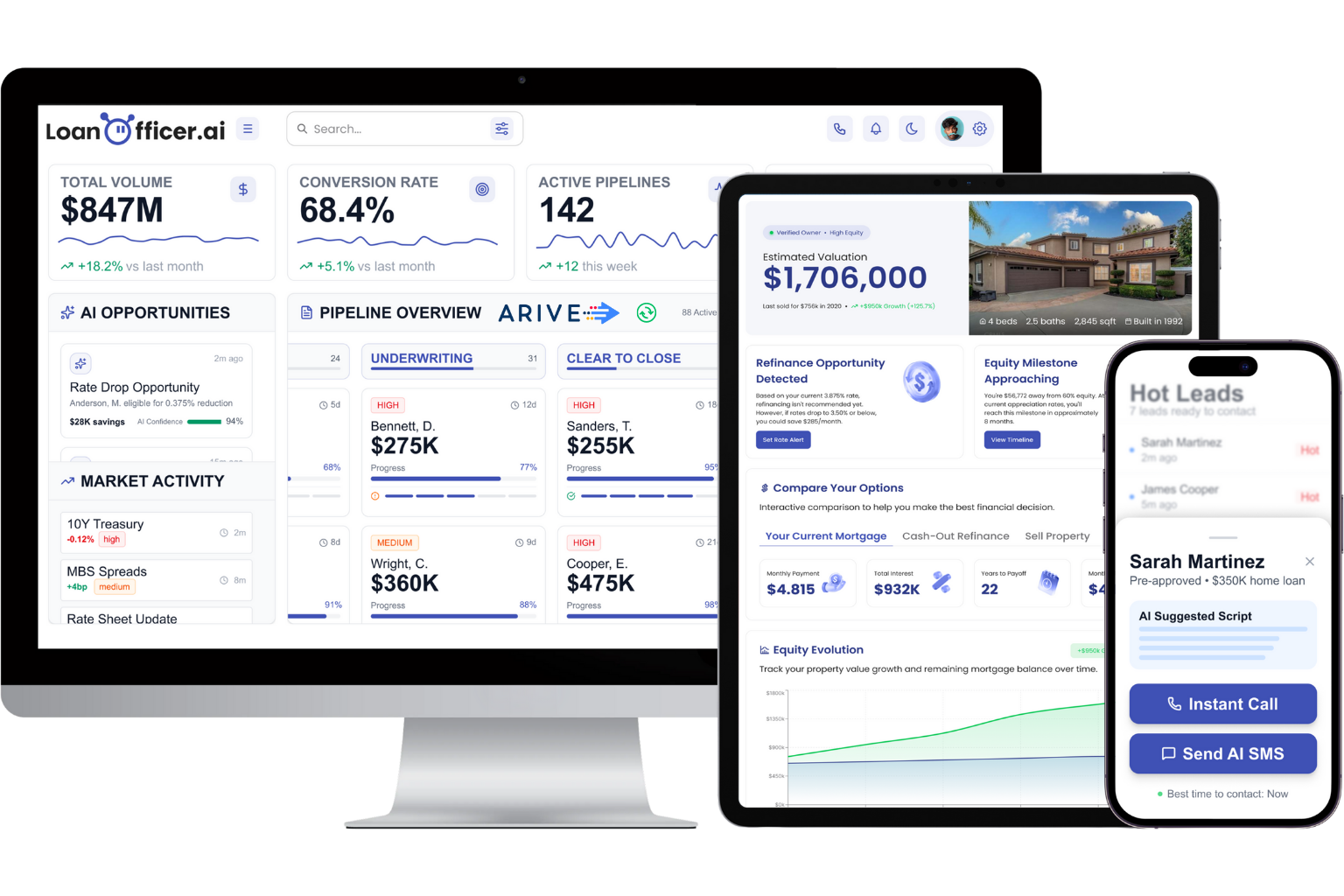
You can see all of it for yourself on our $1 14-day trial. Set up your list, run one power hour, and judge it by the appointments you book.
FAQ
What is the power hour method and how does it work?
It is a focused block of dialing, often scheduled for a defined period, with a clear goal and no interruptions. You concentrate outbound calls into one surge, then back off for deeper work, following the “surge, back off, surge” approach described by InsideSales.
What does power hour mean in sales?
In sales, a power hour is a protected period devoted entirely to prospecting calls. Reps, and often whole teams, drop other tasks and aim for as many live conversations and appointments as possible within that window.
What are the basic rules of a power hour?
Block your calendar, prepare your list in advance, dial without stopping, and log quick dispositions. Hold a short huddle before and after the session so you set targets and capture lessons.
What time should a power hour start?
There is no single best time, because it depends on who you are calling. Test calling windows by contact type and track your own connect rates.
Sources
- Sep24 PP01.qxp_Layout 1
- 4 Sales Prospecting Tips to Surge Ahead With Power Hours - InsideSales
- HubSpot’s 2025 State of Cold Calling Report Data From 350+ Sales Professionals
- Cold Calling
